Contents
- 1 Understanding Ethereum Staking and MetaMask Integration
- 2 How MetaMask Staking Works
- 3 Benefits of Liquid Staking Through MetaMask
- 4 Supported Liquid Staking Protocols
- 5 Security Considerations for MetaMask Staking
- 6 Maximizing Staking Rewards with MetaMask
- 7 Future Developments in MetaMask Staking
- 8 Conclusion
- 9 Frequently Asked Questions
Ethereum staking has become a cornerstone of the network’s proof-of-stake consensus mechanism, offering users the opportunity to earn rewards while securing the blockchain. For Web3 users seeking to stake ETH MetaMask provides seamless integration with leading liquid staking protocols, eliminating the complexity traditionally associated with Ethereum staking. As the world’s leading browser extension wallet, MetaMask connects millions of users to decentralized finance applications, making it easier than ever to participate in Ethereum’s staking ecosystem.
The ability to stake ETH through MetaMask represents a significant advancement in accessible staking solutions. Rather than requiring technical expertise or minimum 32 ETH deposits for solo staking, MetaMask users can now access liquid staking protocols directly through their trusted Web3 wallet. This integration maintains the self-custodial nature that makes MetaMask the preferred choice for DeFi traders, NFT collectors, and blockchain developers worldwide.
In this comprehensive guide, you’ll discover how MetaMask staking works, explore the benefits of liquid staking protocols, and learn how to maximize your Ethereum staking rewards while maintaining full control of your digital assets. Whether you’re new to staking or looking to optimize your existing strategy, MetaMask’s staking features provide the tools you need to participate confidently in Ethereum’s economic security.
Understanding Ethereum Staking and MetaMask Integration
Ethereum’s transition to proof-of-stake fundamentally changed how the network operates and how users can participate in its security. Traditional Ethereum staking requires validators to lock up 32 ETH and run specialized hardware, creating barriers for average users. MetaMask bridges this gap by integrating with liquid staking protocols that pool smaller amounts of ETH from multiple users.
When you stake ETH MetaMask through liquid staking providers like Lido, your ETH is pooled with other users’ stakes and distributed across professional validators. This approach offers several advantages: you receive liquid staking tokens (like stETH) that represent your staked ETH, you can stake any amount above the minimum threshold, and you maintain liquidity while earning staking rewards.
The MetaMask browser extension makes accessing these staking protocols as simple as connecting to any decentralized application. Your Secret Recovery Phrase remains under your complete control, ensuring that your staked assets follow the same self-custodial principles that make MetaMask the leading Web3 wallet for over 100 million users worldwide.
How MetaMask Staking Works
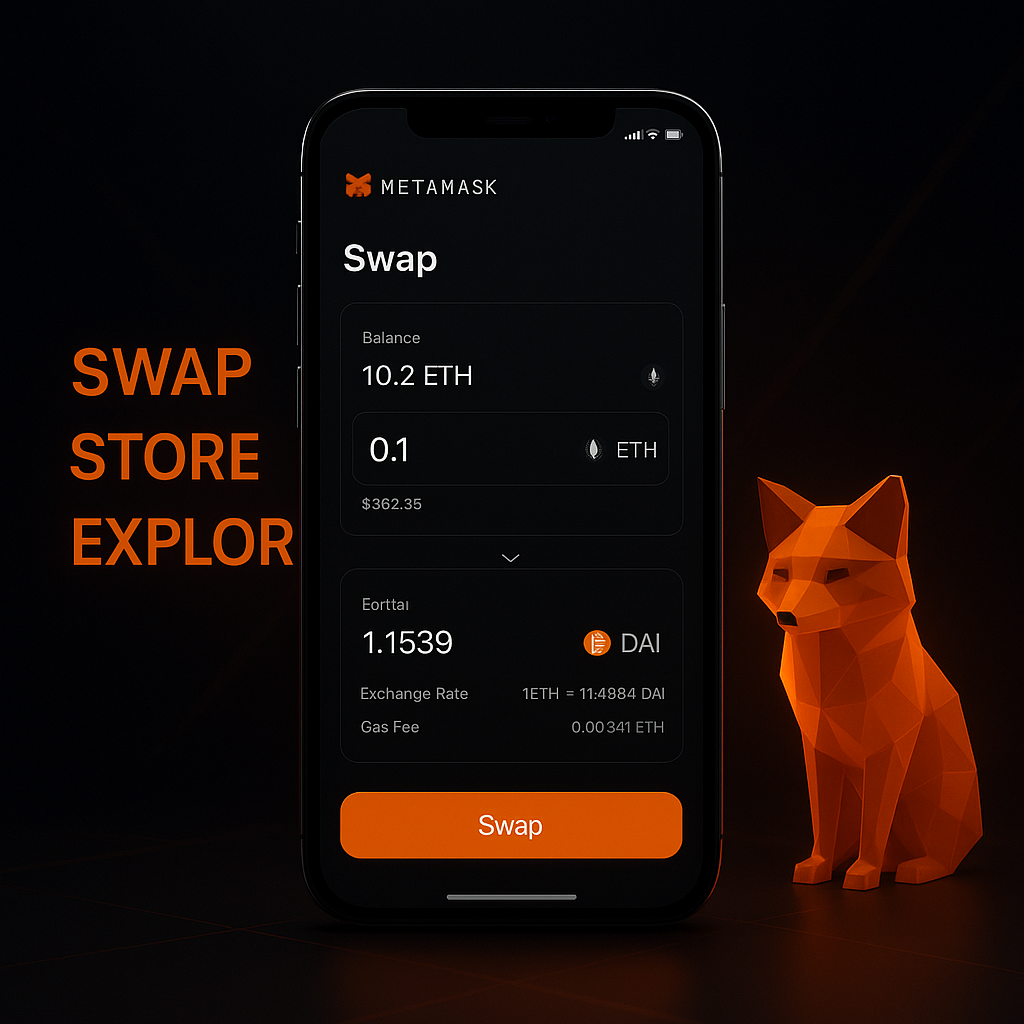
MetaMask staking leverages the wallet’s existing dApp browser functionality to connect users with established liquid staking protocols. The process begins when you navigate to a supported staking protocol through MetaMask’s integrated browser or by visiting the protocol’s website with MetaMask installed as your browser extension.
The staking process typically involves connecting your MetaMask wallet to the staking protocol, selecting the amount of ETH you wish to stake, and confirming the transaction through MetaMask’s familiar interface. Gas fees for the staking transaction are calculated and displayed upfront, ensuring transparency in the staking process.
Once your ETH is staked, you receive liquid staking tokens that represent your stake. These tokens often continue earning staking rewards automatically, and their value typically appreciates relative to ETH based on accumulated staking rewards. The liquid nature of these tokens means you can use them in other DeFi protocols, trade them, or hold them in your MetaMask wallet alongside your other digital assets.
Benefits of Liquid Staking Through MetaMask
Liquid staking MetaMask integration offers compelling advantages over traditional staking approaches. Primary among these benefits is accessibility – you can begin staking with any amount of ETH rather than the 32 ETH requirement for solo validators. This democratization of staking opens Ethereum rewards to a broader audience of Web3 participants.
Liquidity represents another crucial advantage. Unlike traditional staking where your ETH is locked until Ethereum’s withdrawal functionality is fully implemented, liquid staking tokens can be traded, used as collateral in DeFi protocols, or converted back to ETH through decentralized exchanges. This flexibility allows you to maintain exposure to staking rewards while preserving capital flexibility.
The professional validator management provided by liquid staking protocols eliminates technical requirements and risks associated with running your own validator. These protocols employ experienced operators who maintain high uptime and optimal performance, maximizing your staking rewards while minimizing the risk of penalties from validator mistakes.
Supported Liquid Staking Protocols
MetaMask’s open architecture supports integration with multiple liquid staking protocols, each offering unique features and token mechanics. Lido represents the largest liquid staking protocol, offering stETH tokens that automatically accrue staking rewards and maintain broad DeFi integration across major protocols like Curve, Aave, and Compound.
Rocket Pool provides a more decentralized alternative with rETH tokens, emphasizing permissionless validator participation and protocol governance. Coinbase’s cbETH offers integration with centralized exchange services, while Frax’s sfrxETH implements innovative dual-token mechanics that separate staking yield from the base staking token.
Each protocol maintains different fee structures, reward distribution mechanisms, and DeFi integrations. MetaMask’s browser extension allows you to explore these options directly, comparing protocols and selecting the approach that best aligns with your staking goals and risk tolerance.
Security Considerations for MetaMask Staking
Security remains paramount when you stake ETH MetaMask, and understanding the risk layers helps ensure safe participation. Smart contract risk represents the primary consideration, as liquid staking protocols rely on smart contracts to manage staked ETH and distribute rewards. Established protocols undergo regular security audits, but smart contract bugs or exploits remain theoretical possibilities.
Validator risk affects all Ethereum staking, including liquid staking. Poor validator performance can result in penalties that reduce staking rewards or, in extreme cases, result in slashing where a portion of staked ETH is permanently lost. Reputable liquid staking protocols employ professional operators and implement insurance mechanisms to mitigate these risks.
Your MetaMask wallet security practices directly impact staking safety. Always verify you’re interacting with legitimate protocol websites, double-check transaction details before signing, and never share your Secret Recovery Phrase with anyone. Hardware wallet integration provides additional security for significant staking amounts by keeping your private keys in offline storage.
MetaMask Security Best Practices
Implementing proper security practices enhances your staking safety. Enable MetaMask’s phishing detection features, verify smart contract addresses before interacting with staking protocols, and use hardware wallets for accounts holding substantial amounts. Regularly update your MetaMask browser extension to benefit from the latest security improvements and features.
Consider using separate MetaMask accounts for different activities – one for staking, another for experimental DeFi interactions, and a third for NFT transactions. This compartmentalization limits exposure if one account is compromised and makes tracking different strategies easier.
Maximizing Staking Rewards with MetaMask
To earn crypto MetaMask through staking effectively, understanding reward optimization strategies helps maximize your returns. Compound your staking rewards by regularly claiming and restaking earned tokens, taking advantage of the compounding effect over time. Some protocols offer auto-compounding features that handle this process automatically.
Compare staking protocols based on their net APY after fees, but also consider factors like liquidity, DeFi integration opportunities, and protocol security track records. Higher yields sometimes indicate higher risks, so balance potential returns against security considerations based on your risk tolerance.
Leverage liquid staking tokens in DeFi protocols to earn additional yield on top of base staking rewards. Provide liquidity to stETH/ETH pools on Curve, use liquid staking tokens as collateral on lending protocols, or participate in yield farming opportunities that specifically target liquid staking assets.
Timing and Strategy Considerations
Market conditions affect liquid staking token pricing and yield opportunities. During periods of high DeFi activity, additional yield farming opportunities often emerge for liquid staking tokens. Conversely, during market stress, liquid staking tokens may trade at discounts to underlying ETH, creating potential arbitrage opportunities.
Consider the tax implications of staking rewards in your jurisdiction, as different treatment may apply to staking rewards versus trading gains. Some users prefer protocols that accrue rewards through token appreciation rather than distributing rewards as taxable events.
Future Developments in MetaMask Staking
The MetaMask ecosystem continues evolving to support enhanced staking experiences. MetaMask Snaps, the wallet’s extensibility platform, enables developers to create specialized staking interfaces and tools directly within the MetaMask interface. These extensions could provide advanced staking analytics, automated reward optimization, or integration with emerging staking protocols.
Ethereum’s roadmap includes features like withdrawal credentials and validator exit queues that will further improve liquid staking mechanics. MetaMask’s position as the leading Web3 wallet ensures early integration with these protocol improvements, maintaining its role as the preferred interface for Ethereum staking.
Layer 2 scaling solutions are beginning to implement their own staking mechanisms, and MetaMask’s multi-chain support positions it well to support staking across different EVM-compatible networks. This expansion could provide additional staking opportunities while maintaining the familiar MetaMask interface across different blockchain ecosystems.
Conclusion
The integration of Ethereum staking capabilities within MetaMask represents a significant advancement in making blockchain rewards accessible to mainstream Web3 users. By combining the trusted self-custodial security of the world’s leading browser extension wallet with the accessibility of liquid staking protocols, MetaMask enables millions of users to participate in Ethereum’s economic security while maintaining full control of their digital assets.
Whether you’re seeking to earn crypto MetaMask through staking rewards, exploring liquid staking MetaMask integration for the first time, or optimizing an existing staking strategy, the combination of MetaMask’s intuitive interface with established staking protocols provides a robust foundation for Ethereum staking participation.
Ready to start earning staking rewards on your ETH? Download the MetaMask browser extension today and explore the growing ecosystem of liquid staking protocols that make Ethereum staking accessible, secure, and rewarding for Web3 users worldwide.
Frequently Asked Questions
Is it safe to stake ETH through MetaMask?
Yes, staking ETH through MetaMask maintains the same self-custodial security principles as other MetaMask transactions. Your Secret Recovery Phrase remains under your control, and you interact directly with staking protocols through MetaMask’s secure browser extension. However, staking involves additional risks including smart contract risk and validator performance risk that you should understand before participating.
What’s the minimum amount of ETH I can stake with MetaMask?
The minimum staking amount depends on the liquid staking protocol you choose, not MetaMask itself. Most liquid staking protocols like Lido allow staking with as little as 0.01 ETH, making staking accessible regardless of your ETH holdings. Solo staking requires 32 ETH, but liquid staking through MetaMask eliminates this barrier.
How do I receive staking rewards when using MetaMask?
Staking rewards are distributed according to each protocol’s mechanism. Some protocols like Lido automatically accrue rewards in your liquid staking tokens (stETH appreciates relative to ETH), while others distribute reward tokens separately. All reward tokens appear in your MetaMask wallet and can be managed like any other ERC-20 tokens.
Can I unstake my ETH anytime through MetaMask?
Liquid staking tokens can typically be traded for ETH on decentralized exchanges anytime, providing effective liquidity even when direct unstaking isn’t available. Some protocols also offer direct unstaking features with varying withdrawal periods. The specific options depend on the staking protocol you choose and current Ethereum network conditions.
What are the risks of liquid staking through MetaMask?
Liquid staking risks include smart contract vulnerabilities in staking protocols, validator performance risks that could reduce rewards or cause slashing, and potential liquidity risks where liquid staking tokens trade below their underlying ETH value. Additionally, general MetaMask security practices remain important to protect your assets.
Do I need to keep MetaMask open to earn staking rewards?
No, you don’t need to keep MetaMask open to earn staking rewards. Once your ETH is staked through a liquid staking protocol, rewards accrue automatically based on validator performance. You can check your rewards anytime by opening MetaMask and viewing your liquid staking token balance.
Which liquid staking protocols work with MetaMask?
MetaMask supports all major liquid staking protocols including Lido (stETH), Rocket Pool (rETH), Coinbase (cbETH), and Frax (sfrxETH), among others. As a browser extension wallet, MetaMask can interact with any Ethereum-based staking protocol through its dApp browser functionality.
Are there fees for staking ETH through MetaMask?
MetaMask doesn’t charge staking fees, but you’ll pay Ethereum gas fees for staking transactions and protocol fees charged by the staking provider (typically 5-10% of staking rewards). Always review the total costs including gas fees before confirming staking transactions through MetaMask.
Can I use my liquid staking tokens in other DeFi protocols?
Yes, liquid staking tokens function as standard ERC-20 tokens in your MetaMask wallet and can be used across DeFi protocols. You can provide liquidity on DEXes, use them as collateral for borrowing, or participate in yield farming, all while continuing to earn base staking rewards.
How do I add liquid staking tokens to my MetaMask wallet?
Most liquid staking tokens are automatically detected by MetaMask after you receive them. If not, you can manually add them using the “Import tokens” feature with the token’s contract address. Popular liquid staking tokens like stETH, rETH, and cbETH are usually pre-loaded in MetaMask’s token list.
Can I stake ETH on other networks through MetaMask?
Yes, MetaMask’s multi-chain support allows you to stake on various EVM-compatible networks that offer their own staking mechanisms. You can switch networks within MetaMask to access staking opportunities on Polygon, Binance Smart Chain, Avalanche, and other supported networks, each with their own staking protocols and reward structures.
What happens to my staked ETH if MetaMask is compromised?
If your MetaMask wallet is compromised, your staked ETH security depends on the staking protocol’s design. Most liquid staking protocols hold your ETH in smart contracts, so immediate access requires the liquid staking tokens in your wallet. You can recover access using your Secret Recovery Phrase on a new device, but securing compromised accounts quickly is essential to protect all assets.


Well-structured material. the DeFi guide section was especially helpful and informative. Bookmarked for future reference. Great resource. Well done! Thanks again! Great resource. Very helpful! Thanks again!
Perfect timing, helped solve my token swap. Recommend to everyone interested. Will follow your recommendations. Great resource. Highly recommend. Highly recommend. Great resource. Thanks again! Well done!
Thanks for the article! particularly useful insights on Secret Recovery Phrase and NFT management. Author did a great job explaining clearly. Highly recommend. Highly recommend. Great resource. Great resource.
Appreciate the detail, great breakdown of DeFi tools. Very practical approach. Info came in very handy. Well done! Very helpful! Thanks again! Great resource. Great resource. Very helpful! Well done! Highly recommend.
Solid information, those wanting to understand DeFi integration better. Well explained. Highly recommend this resource. Well done! Highly recommend. Great resource. Very helpful! Great resource. Well done!
Bookmarked this, valuable information about MetaMask Swaps that’s hard to find elsewhere. Thanks for the detailed explanation! Great resource. Great resource. Well done! Very helpful! Thanks again! Thanks again!
Excellent article, exactly the information I needed about Web3 access. Info came in very handy. Very helpful! Very helpful! Well done! Thanks again! Well done! Well done! Highly recommend. Great resource.
Great guide! valuable information about Secret Recovery Phrase that’s hard to find elsewhere. Will follow your recommendations. Highly recommend. Very helpful! Great resource. Great resource. Thanks again!
Finally found valuable information about browser extension that’s hard to find elsewhere. Author did a great job explaining clearly. Very helpful! Very helpful! Very helpful! Very helpful! Well done! Well done!
Comprehensive guide, your recommendations on Secret Recovery Phrase. Will definitely implement these. Information is truly up-to-date. Thanks again! Highly recommend. Great resource. Very helpful! Well done!
Finally found valuable information about EVM chains that’s hard to find elsewhere. Everything explained clearly. Well done! Very helpful! Highly recommend. Thanks again! Great resource. Great resource.
Perfect timing, especially about gas optimization. Wasn’t aware of these nuances before. Finally figured this out, big thanks! Highly recommend. Thanks again! Well done! Well done! Great resource. Great resource.