Contents
- 1 What is Web3 and Why Does It Matter?
- 2 How Crypto Wallets Enable Web3 Access
- 3 MetaMask: The Leading Web3 Wallet Platform
- 4 Essential MetaMask Features for Web3 Navigation
- 5 DeFi and NFT Access Through MetaMask
- 6 Security Best Practices for Web3 Wallets
- 7 The Future of Web3 and Decentralized Applications
- 8 Getting Started with MetaMask and Web3
- 9 Conclusion
- 10 Frequently Asked Questions
The internet is evolving into a new paradigm called Web3, where users regain control over their digital assets, identity, and data. Unlike traditional web applications that rely on centralized servers and intermediaries, Web3 represents a decentralized ecosystem built on blockchain technology. Understanding what is Web3 becomes crucial as this revolutionary shift transforms how we interact with digital services, from finance to social media and beyond.
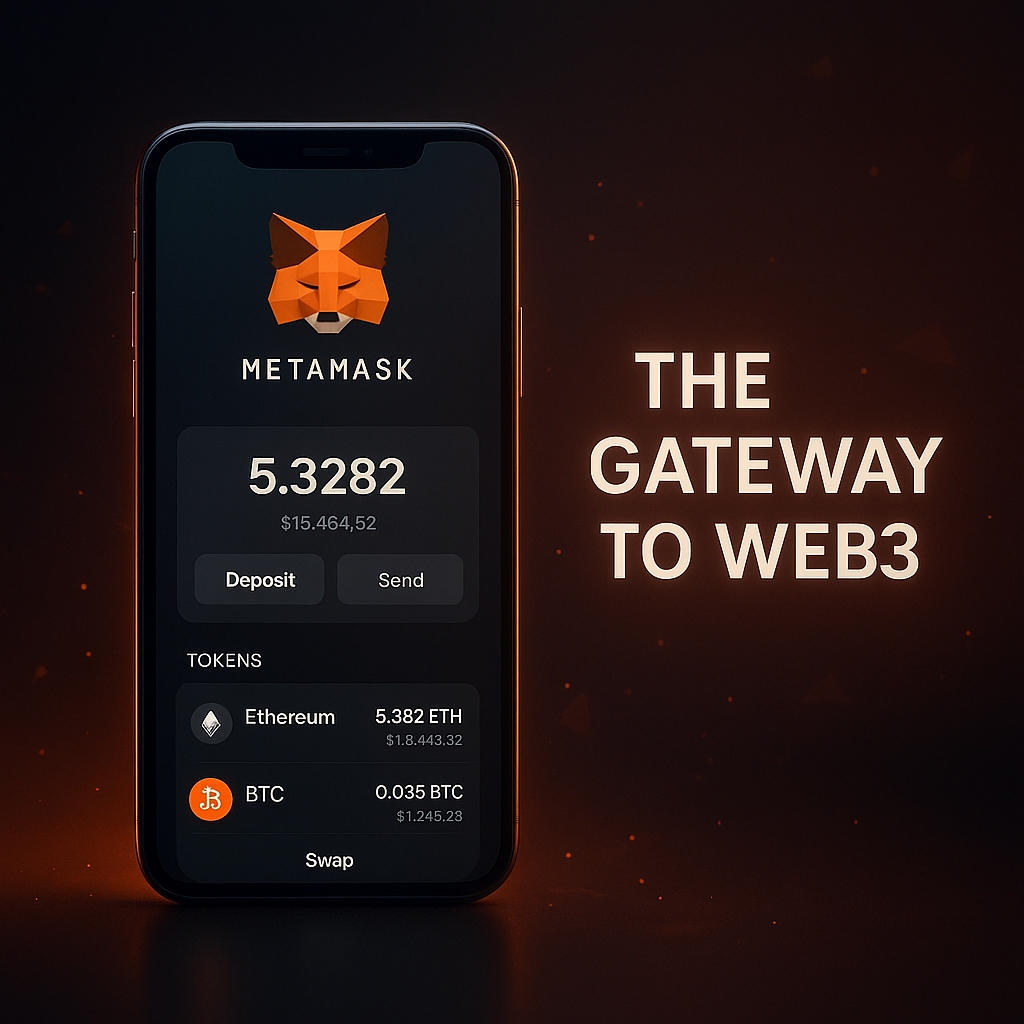
MetaMask serves as the leading browser extension wallet that enables seamless access to this decentralized web. As an Ethereum-first, self-custodial wallet, MetaMask empowers millions of users worldwide to safely store cryptocurrencies, trade tokens, collect NFTs, and interact with thousands of decentralized applications. Whether you’re a DeFi trader exploring yield farming opportunities or an NFT collector browsing digital art marketplaces, MetaMask provides the secure foundation you need.
In this comprehensive overview, you’ll discover what makes Web3 fundamentally different from today’s internet, how blockchain technology enables true digital ownership, and why a self-custodial wallet like MetaMask is essential for navigating this new digital frontier. We’ll explore the key features that make MetaMask the preferred choice for Web3 enthusiasts and explain how crypto wallets work to secure your digital assets.
What is Web3 and Why Does It Matter?
Web3 represents the third generation of internet services, built on decentralized networks that prioritize user ownership and control. While Web1 offered static information and Web2 introduced interactive social platforms controlled by major corporations, Web3 leverages blockchain technology to create applications where users truly own their data, digital assets, and online identity.
At its core, Web3 eliminates traditional intermediaries by using smart contracts—self-executing code on blockchain networks like Ethereum. This means users can send money, trade assets, or access services directly with each other, without banks, exchanges, or platform companies controlling the process. Understanding what is Ethereum becomes essential here, as it serves as the foundational blockchain powering most Web3 applications through its robust smart contract capabilities.
The implications are profound: instead of Facebook owning your social media data or banks controlling your financial transactions, you maintain direct ownership and control. Your digital assets live in a self-custodial wallet that only you can access, and your interactions with Web3 applications happen directly on transparent, immutable blockchain networks.
How Crypto Wallets Enable Web3 Access
To understand how crypto wallets work in the Web3 ecosystem, think of them as your digital passport and bank account combined. A blockchain wallet explained simply is software that stores your private keys—cryptographic codes that prove ownership of your digital assets and allow you to interact with blockchain networks.
MetaMask operates as a browser extension wallet, seamlessly integrating with your web browser to provide instant access to Web3 applications. When you visit a decentralized exchange like Uniswap or an NFT marketplace like OpenSea, MetaMask acts as the bridge connecting your digital identity and assets to these platforms. The wallet signs transactions cryptographically, proving you have permission to spend your tokens or interact with specific smart contracts.
What makes a self-custodial wallet like MetaMask revolutionary is that you control your private keys through a Secret Recovery Phrase. This 12-word phrase serves as the master key to your entire Web3 identity and asset portfolio. Unlike traditional financial services where banks hold custody of your funds, self-custodial solutions ensure that only you have access to your cryptocurrencies, NFTs, and other digital assets.
MetaMask: The Leading Web3 Wallet Platform
MetaMask has established itself as the premier gateway to Web3, with over 100 million users worldwide trusting the platform to secure their digital assets and access decentralized applications. As an Ethereum wallet that supports all EVM-compatible blockchain networks, MetaMask provides comprehensive access to the largest ecosystem of Web3 applications and services.
The MetaMask browser extension transforms any Chrome, Firefox, Brave, or Edge browser into a Web3-enabled interface. This crypto wallet extension approach means you can access your digital assets and interact with dApps directly from familiar web browsers, without downloading separate applications or managing complex blockchain infrastructure.
Built by ConsenSys, a leading blockchain technology company, MetaMask combines enterprise-grade security with user-friendly design. The wallet’s open-source architecture undergoes continuous security audits, while its intuitive interface makes Web3 accessible to both newcomers and experienced blockchain users.
MetaMask offers a comprehensive suite of features designed to maximize your Web3 experience while maintaining the highest security standards:
- Multi-chain support: Access Ethereum, Polygon, Binance Smart Chain, Avalanche, Arbitrum, Optimism, and dozens of other EVM-compatible networks from a single interface
- Built-in token swaps: Trade cryptocurrencies directly within your wallet using aggregated liquidity from leading decentralized exchanges
- NFT integration: View, manage, and trade your NFT collection with native support for popular standards and marketplaces
- Hardware wallet compatibility: Connect Ledger and Trezor devices for enhanced security while maintaining the convenience of browser-based access
- MetaMask Snaps: Extend wallet functionality through third-party plugins that add features like multi-party computation, additional blockchain support, and enhanced privacy tools
- Advanced privacy controls: Manage which websites can view your wallet addresses and transaction history
- Gas fee optimization: Smart transaction fee recommendations help minimize costs across different network conditions
The EVM-compatible wallet architecture ensures that MetaMask works seamlessly with thousands of Web3 applications, from DeFi protocols offering yield farming and lending services to NFT platforms showcasing digital art and collectibles. This extensive compatibility makes MetaMask the go-to choice for users who want comprehensive Web3 access without juggling multiple wallet applications.
DeFi and NFT Access Through MetaMask
MetaMask serves as your DeFi wallet, providing secure access to the entire decentralized finance ecosystem. Through the wallet’s browser integration, you can lend cryptocurrencies on platforms like Aave, provide liquidity to Uniswap pools, trade derivatives on dYdX, or participate in yield farming strategies across multiple protocols. The wallet’s built-in swap functionality aggregates liquidity from numerous decentralized exchanges, often providing better prices than individual platforms.
As an NFT wallet, MetaMask automatically detects and displays your digital collectibles, making it easy to view your portfolio and interact with marketplaces like OpenSea, Foundation, and SuperRare. The wallet supports all major NFT standards, including ERC-721 and ERC-1155 tokens, while providing detailed metadata and provenance information for each piece in your collection.
The dApp browser functionality extends beyond finance and collectibles to encompass gaming, social media, governance, and utility applications. Whether you’re participating in DAO governance votes, playing blockchain-based games, or accessing decentralized social networks, MetaMask provides the secure authentication and transaction signing capabilities required for full Web3 participation.
Security Best Practices for Web3 Wallets
Understanding what is self-custodial means taking full responsibility for your digital asset security. MetaMask implements multiple security layers, but users must follow essential practices to maintain wallet safety:
Your Secret Recovery Phrase represents the most critical security element—write it down offline and store multiple copies in secure locations. Never share this phrase with anyone or store it digitally, as anyone with access can control your entire wallet. MetaMask will never ask for your Secret Recovery Phrase, and legitimate support interactions never require sharing this information.
Enable hardware wallet integration when managing significant digital asset amounts. Hardware wallets like Ledger and Trezor store private keys on dedicated devices isolated from internet-connected computers, providing an additional security layer against malware and phishing attempts while maintaining MetaMask’s convenient browser interface.
Always verify website URLs before connecting your wallet, as phishing sites often mimic popular DeFi platforms and NFT marketplaces. MetaMask’s built-in phishing detection helps identify suspicious sites, but users should independently confirm URLs and bookmark trusted applications.
The Future of Web3 and Decentralized Applications
Web3 technology continues evolving rapidly, with new applications and use cases emerging across industries. From decentralized identity solutions that give users control over personal data to blockchain-based supply chain tracking that ensures product authenticity, the decentralized web promises to transform numerous sectors beyond financial services.
MetaMask stays at the forefront of Web3 innovation through continuous development and the revolutionary MetaMask Snaps platform. Snaps allow third-party developers to extend wallet functionality, adding features like support for non-EVM blockchains, advanced privacy tools, and specialized DeFi interfaces. This extensibility ensures that MetaMask can adapt to emerging Web3 trends and user needs.
Layer 2 scaling solutions like Arbitrum, Optimism, and Polygon are making Web3 applications faster and more affordable, while maintaining Ethereum’s security guarantees. MetaMask’s native support for these networks ensures users can access next-generation dApps with improved performance and lower transaction costs.
Getting Started with MetaMask and Web3
Beginning your Web3 journey with MetaMask involves a straightforward process that takes just minutes to complete. Visit the official MetaMask website, download the browser extension for your preferred browser, and follow the setup wizard to create your new wallet or import an existing one using your Secret Recovery Phrase.
During setup, you’ll generate your unique Secret Recovery Phrase—write this down immediately and store it securely offline. Set a strong password for accessing MetaMask within your browser, and consider enabling additional security features like biometric authentication where available.
Once configured, explore Web3 by visiting popular dApps like decentralized exchanges, NFT marketplaces, or DeFi protocols. Start with small amounts to familiarize yourself with transaction processes, gas fees, and wallet interactions. The MetaMask interface provides clear transaction previews and gas fee estimates, helping you understand costs before confirming any blockchain interactions.
Conclusion
Web3 represents a fundamental shift toward a more open, user-controlled internet where individuals truly own their digital assets and online identity. Understanding what is Web3 and how it differs from traditional web services is crucial for anyone looking to participate in this transformative digital economy. Through blockchain technology and self-custodial wallets, users gain unprecedented control over their financial and digital lives.
MetaMask has emerged as the leading platform for Web3 access, providing a secure, user-friendly browser extension wallet that connects seamlessly with thousands of decentralized applications. From DeFi trading and NFT collecting to blockchain gaming and DAO participation, MetaMask enables comprehensive Web3 engagement while maintaining the highest security standards through self-custodial architecture.
The future of the internet is decentralized, transparent, and user-controlled. By understanding how crypto wallets work and the importance of self-custodial solutions, you can confidently navigate this new digital frontier. Ready to explore the possibilities of Web3? Download MetaMask today and join millions of users already building the future of the decentralized internet.
Frequently Asked Questions
What is Web3 and how is it different from Web2?
Web3 is the decentralized version of the internet built on blockchain technology, where users control their own data and digital assets. Unlike Web2, which relies on centralized platforms like Facebook and Google that own user data, Web3 applications run on decentralized networks where users maintain ownership and control through self-custodial wallets like MetaMask.
Is MetaMask safe to use for storing cryptocurrency?
Yes, MetaMask is a secure self-custodial wallet where you control your private keys through your Secret Recovery Phrase. The wallet uses industry-standard encryption and never stores your sensitive information on servers. Your security depends on keeping your Secret Recovery Phrase safe and following best practices like using hardware wallets for large amounts.
What does self-custodial mean?
Self-custodial means you have complete control over your private keys and digital assets without relying on third parties like banks or exchanges. With MetaMask, your Secret Recovery Phrase gives you exclusive access to your wallet—no one else, including MetaMask, can access your funds or recover your wallet if you lose your phrase.
How do crypto wallets work with Web3 applications?
Crypto wallets like MetaMask act as your digital identity and gateway to Web3 applications. When you interact with a dApp, your wallet signs transactions cryptographically to prove ownership of your assets. The browser extension connects seamlessly with Web3 sites, allowing you to trade on DEXs, buy NFTs, or participate in DeFi protocols directly from your browser.
What is Ethereum and why is it important for Web3?
Ethereum is the leading blockchain network that powers most Web3 applications through smart contracts—self-executing code that runs without intermediaries. As an Ethereum wallet, MetaMask provides access to the largest ecosystem of DeFi protocols, NFT marketplaces, and dApps. Ethereum’s EVM (Ethereum Virtual Machine) also powers many other blockchain networks that MetaMask supports.
Can I lose my cryptocurrency if I lose my Secret Recovery Phrase?
Yes, if you lose your Secret Recovery Phrase and cannot access your MetaMask wallet through other means, your funds are permanently lost. This is the trade-off of self-custody—while you have complete control, you also have complete responsibility. Always write down your Secret Recovery Phrase and store multiple copies in secure, offline locations.
Which browsers support the MetaMask extension?
MetaMask browser extension is available for Chrome, Firefox, Brave, and Edge browsers. The extension works identically across all supported browsers, providing the same security features and Web3 access. You can also use MetaMask Mobile on iOS and Android devices for on-the-go Web3 access.
What are MetaMask Snaps and how do they work?
MetaMask Snaps are third-party plugins that extend your wallet’s functionality beyond the core features. Snaps can add support for non-EVM blockchains, provide enhanced privacy tools, offer specialized DeFi interfaces, or integrate with external services. This extensibility platform allows MetaMask to evolve with the Web3 ecosystem while maintaining security and user control.
How much does it cost to use MetaMask?
MetaMask is free to download and use. However, you’ll pay network transaction fees (called gas fees) when interacting with blockchain networks like Ethereum. These fees go to network validators, not to MetaMask. The wallet also offers optional premium features like MetaMask Institutional for organizations and advanced Snaps functionality.
Can I use MetaMask with hardware wallets?
Yes, MetaMask integrates seamlessly with popular hardware wallets like Ledger and Trezor devices. This combination provides enhanced security by storing your private keys on the hardware device while maintaining MetaMask’s convenient browser interface for interacting with Web3 applications. Hardware integration is recommended for users managing significant cryptocurrency amounts.
What blockchain networks does MetaMask support?
MetaMask supports Ethereum and all EVM-compatible blockchain networks including Polygon, Binance Smart Chain, Avalanche, Arbitrum, Optimism, Fantom, and many others. You can add custom networks manually or through the network selector. With MetaMask Snaps, support extends to non-EVM blockchains like Bitcoin and Solana through specialized plugins.
How do I start using Web3 applications with MetaMask?
After installing MetaMask and setting up your wallet, visit any Web3 application like a decentralized exchange or NFT marketplace. Click “Connect Wallet” on the site, select MetaMask, and approve the connection. You can then interact with the application directly through your browser—buying tokens, trading NFTs, or accessing DeFi services with MetaMask handling all transaction signing and security.


Straight to the point, how you covered FAQ. Comprehensive and clear. Thanks for the detailed explanation! Thanks again! Very helpful! Well done! Well done! Well done! Great resource. Very helpful! Very helpful!
Exactly what I was looking for, the explanation of Web3 features. Made everything much clearer. Exactly what I was searching for. Highly recommend. Thanks again! Well done! Very helpful! Thanks again!
Appreciate the detail, the explanation of Snaps platform. Made everything much clearer. Everything explained clearly. Well done! Great resource. Great resource. Highly recommend. Well done! Well done!
Quality overview, valuable information about Secret Recovery Phrase that’s hard to find elsewhere. Very helpful and practical. Highly recommend. Very helpful! Thanks again! Well done! Well done! Great resource.
Perfect timing, was looking for info about browser extension setup, found everything here. Bookmarked for future reference. Well done! Well done! Thanks again! Very helpful! Highly recommend. Very helpful!
Very useful information, valuable information about gas optimization that’s hard to find elsewhere. Will keep an eye out for new posts! Well done! Highly recommend. Great resource. Great resource. Great resource.
Exactly what I was looking for, loved the part about DeFi tools. Everything is clear even for beginners. Exactly what I was searching for. Thanks again! Well done! Great resource. Very helpful! Highly recommend.
Exactly what I was looking for, how you covered security tips. Comprehensive and clear. Perfect resource for this topic. Well done! Highly recommend. Very helpful! Well done! Very helpful! Highly recommend.
This helped me the focus on Ethereum support. This is exactly what beginners need. Exactly what I was searching for. Thanks again! Thanks again! Very helpful! Well done! Thanks again! Great resource. Great resource.
Finally found those wanting to understand DeFi integration better. Well explained. Really appreciate this guide. Well done! Thanks again! Highly recommend. Great resource. Highly recommend. Thanks again!
Finally found helped solve my network connection. Recommend to everyone interested. Exactly what I was searching for. Highly recommend. Great resource. Very helpful! Highly recommend. Great resource. Well done!
Appreciate the detail, valuable information about hardware wallet that’s hard to find elsewhere. Everything explained clearly. Great resource. Thanks again! Great resource. Great resource. Thanks again!